Visuals: https://getbehindthebillboard.com/episode-117-tim-riley-the-economist-years-part-2
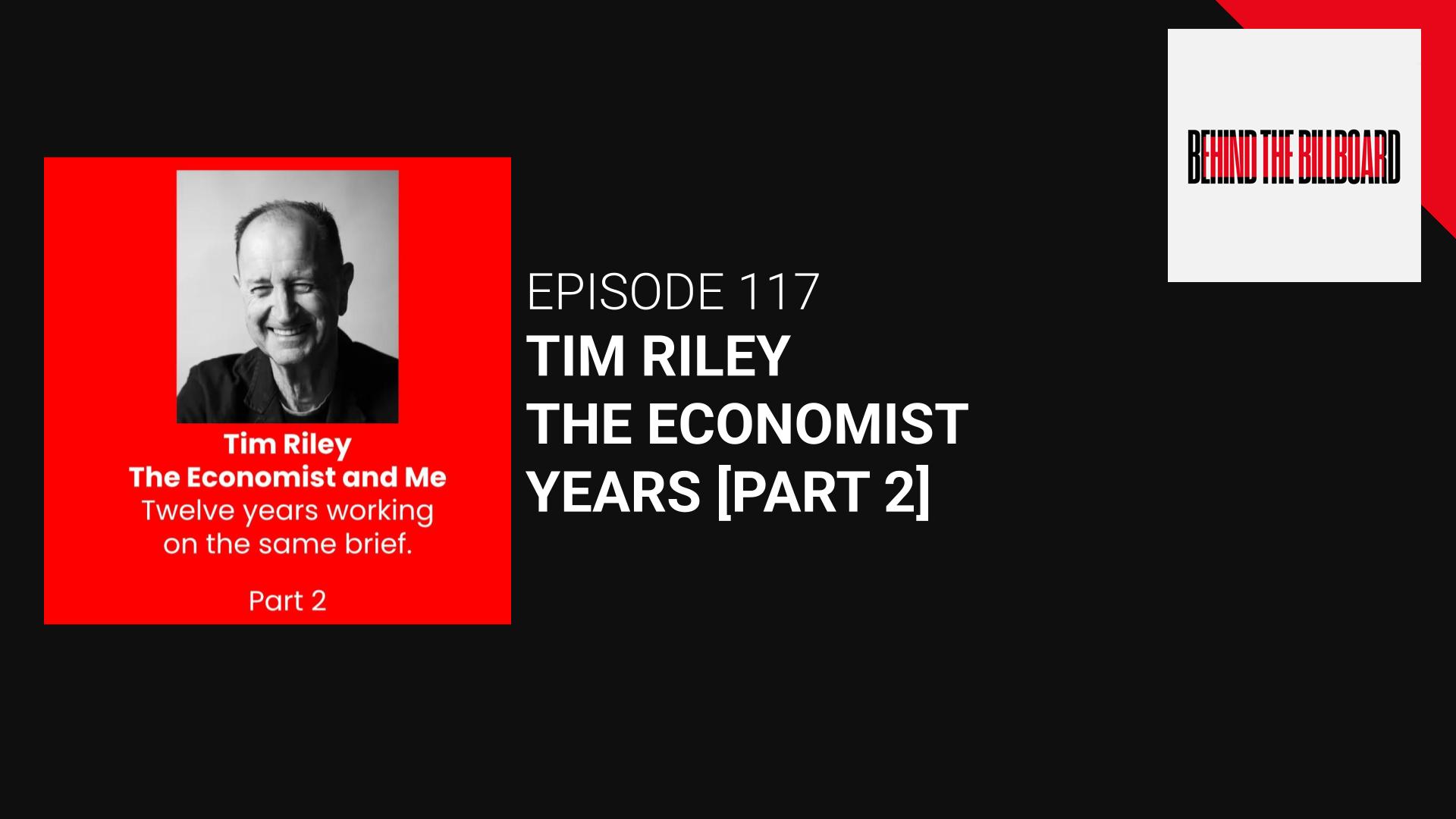
Episode #117 features the second part of our Tim Riley Economist special.
We re-join with Tim’s first ever Economist ad: ‘Protects against foot-in-mouth disease.’ Many more were to follow.
We discovered tricks learnt along the way. How an casual chat about the TV show ‘Who wants to be a millionaire’ became another Economist ad: “Can I phone an Economist reader please Chris?” And how to keep coming up with ideas, year after year. And the degree of difficulty in writing the ideas was as follows:
- Puns
- Visuals
- Good jokes
- Genuinely insightful observation
Then bizarrely ‘The Simpsons’ popped up in the conversation and we found out why they were rejected not once, but twice. D’oh!
We heard what it was like to become a CD on The Economist.
More fuck-ups.
The evolution of an Economist ad.
Why there’s always room to experiment.
The ones that got away, which included ‘The Economist Rapper’ which in our humble opinion is genius.
We even found time to talk about The Economist Building – a Grade II listed Brutalist architectural complex in London’s St James’s, designed by Alison and Peter Smithson.
At the end we paid homage to Alfredo Marcantonio and his ‘Well-written and Red’ book, which is basically the Bible for Economist posters. And also thanked the Advertising-Gods for Dave Dye and his huge contribution to the campaign.
Tim, thank you so much again for sharing this incredible story. So many tips, insights and smart thinking for every and anyone in the creative industry.
We dedicate these episodes to the memory of David Abbott and every single person – creative / account person / planner / project manager / designer / art worker / illustrator / photographer – who’s ever worked on The Economist past, present and future. Utter (billboard) brilliance ;-)
Thanks to all our sponsors, who make the show possible:
NB: The images here are not all Tim’s work, but rather a (visual) history of The Economist years created by the great and the good from the AMVBBDO creative department.